- 10% EARLY BIRD DISCOUNT BEFORE JUNE 1ST
- 10% EARLY BIRD DISCOUNT BEFORE JUNE 1ST
AUGUST 8-19
THE PATH TO SHAMBHALA
SACRED PILGRIMAGE THROUGH LADAKH, INDIA
-
An 11-day sacred immersion combining daily practices, visits to ancient monasteries, Himalayan landscapes, and meaningful community connections to deepen your inner journey.
-
From ancient monasteries to mountain passes and secluded valleys, each location offers a gateway to silence, wonder, and profound inner connection.
-
A transformational experience that shifts your perspective, anchors your essence, and stays with you long after you’ve returned home.

It is not a retreat - it’s a pilgrimage.
This is a journey in motion. We’ll cross high-altitude passes, ride motorcycles through breathtaking landscapes, and visit hidden, energetically rich places rarely seen by outsiders.
We’ll move with intention, breathe deeply, and create space for reflection and connection through silence, shared stories, and sacred rituals.
Each day integrates yoga, Taoist energy practices, meditation, and channeling, all set against the powerful presence of sacred mountains and ancient monasteries.
This is a path back to yourself.
And the clarity you find here, you’ll carry with you, long after the road ends.
The Route
-
We suggest that all participants arrive in Delhi by 1:00 PM. A private transfer will pick you up from the airport and bring you to the hotel for check-in and rest.
In the afternoon, we’ll gather for an opening circle to connect and set our intentions.
We will spend an afternoon relaxing and getting ready for the journey ahead.
All participants will be invited to join the special group dinner.
-
We fly to Leh, landing at Kushok Bakula Rimpochee Airport — one of the world's highest airports at 10,682 ft. Upon arrival, you will be greeted and transferred to the hotel.
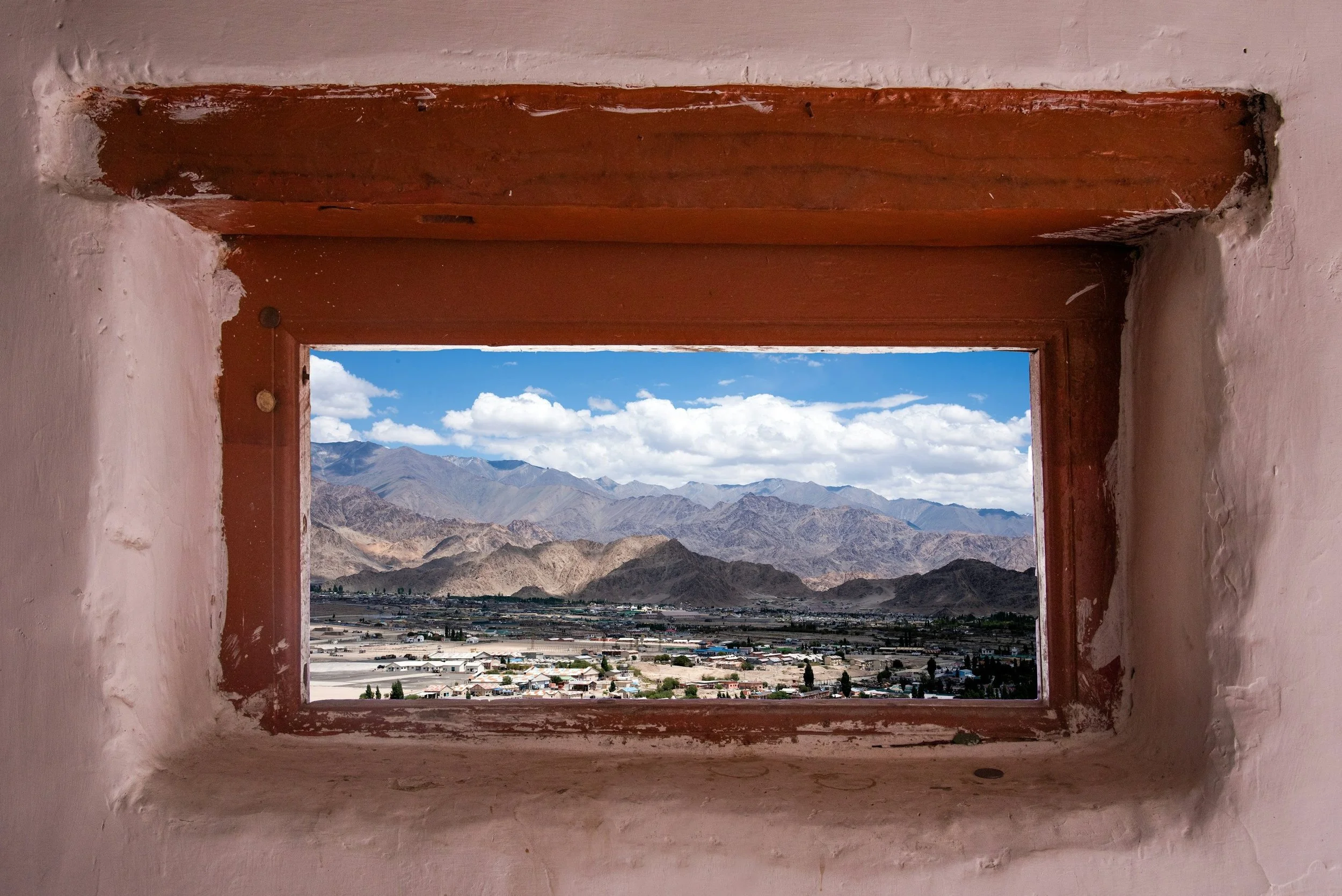
Leh is the capital of Ladakh, a region known for its Tibetan-Buddhist heritage and striking high-altitude landscapes. Historically a key stop on the ancient Silk Road, it remains a culturally rich and visually impressive destination.
The rest of the morning and early afternoon are reserved for relaxation and acclimatization. This is essential to allow your body to adjust to the altitude before the journey begins.
In the afternoon, we take a walk through Leh Market, where you can pick up a local SIM card, warmer layers, or personal items.
Motorcycle riders and their passengers will use this time to inspect their bikes and gear ahead of the road days.
In the evening, we will meet for dinner to try unique local cuisine.
-
We start the day with breathwork, meditation, and a gentle yoga practice.
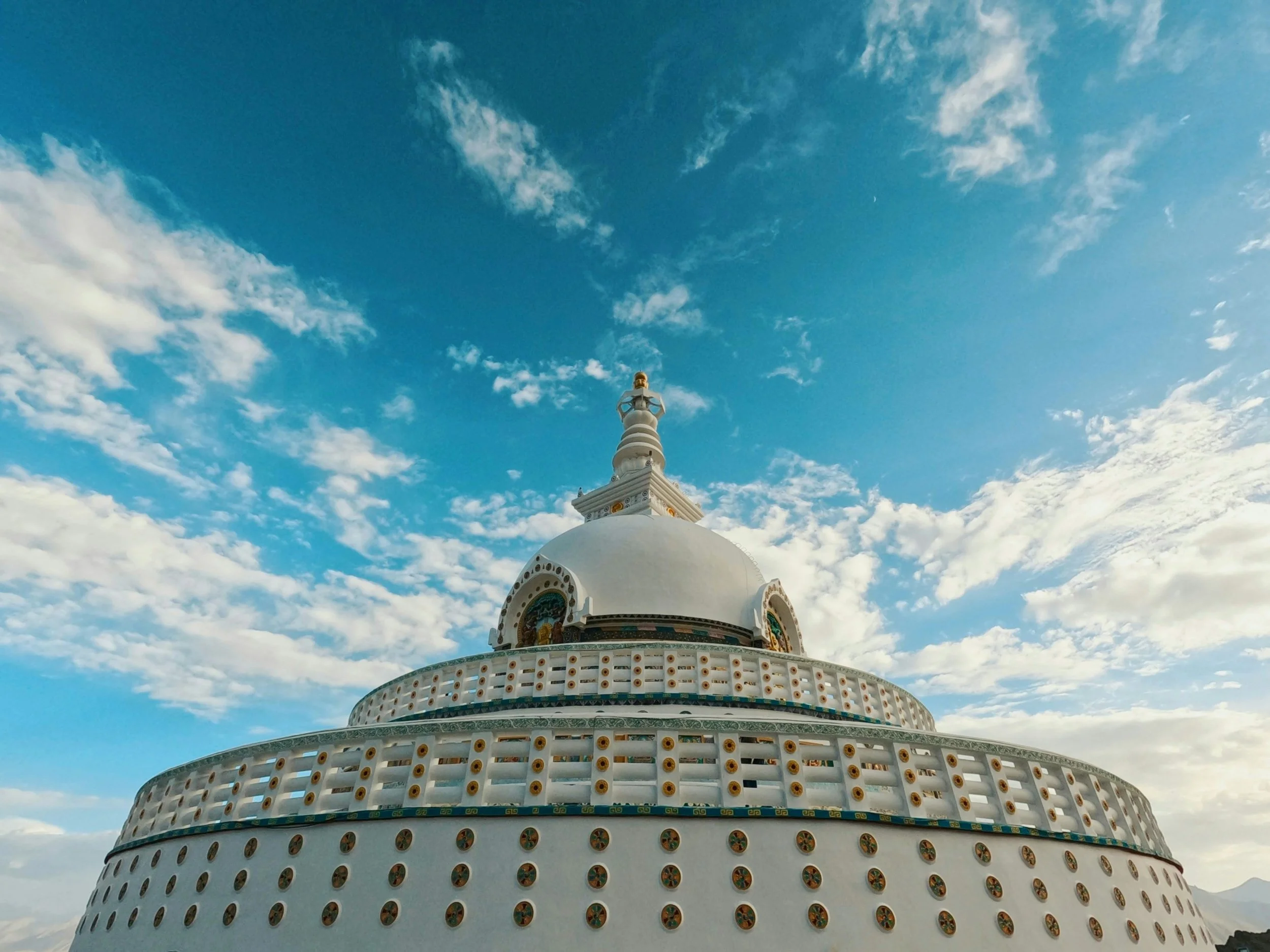
After breakfast, we set out for an easy hike to Shanti Stupa. Built in 1991 by Japanese Buddhist monk Gyomyo Nakamura, the white-domed stupa holds relics of the Buddha at its base, enshrined by the 14th Dalai Lama himself. It was originally envisioned as a symbol of world peace to commemorate 2,500 years of Buddhism. We will spend time here enjoying the panoramic views over Leh and practicing in the meditation hall.
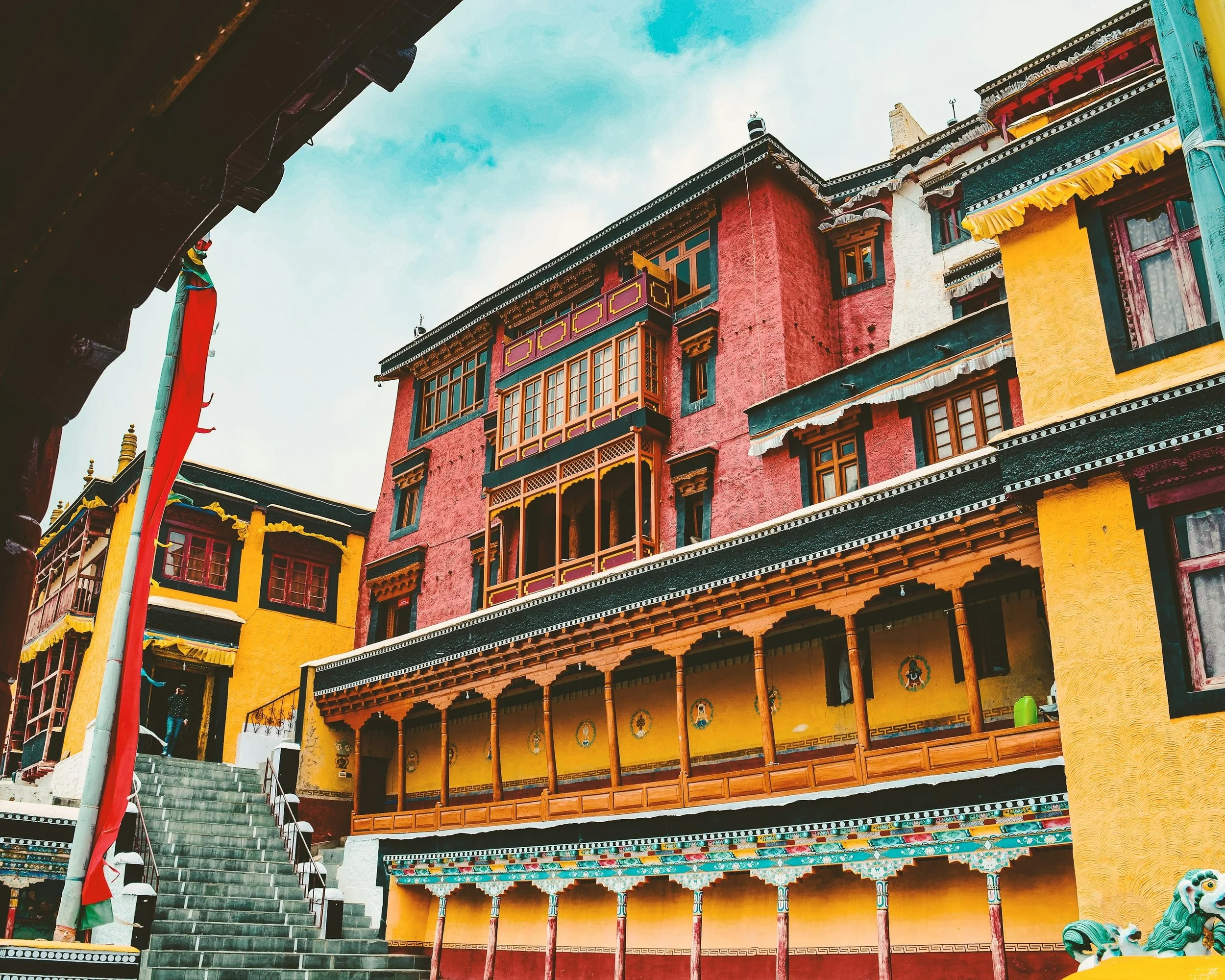
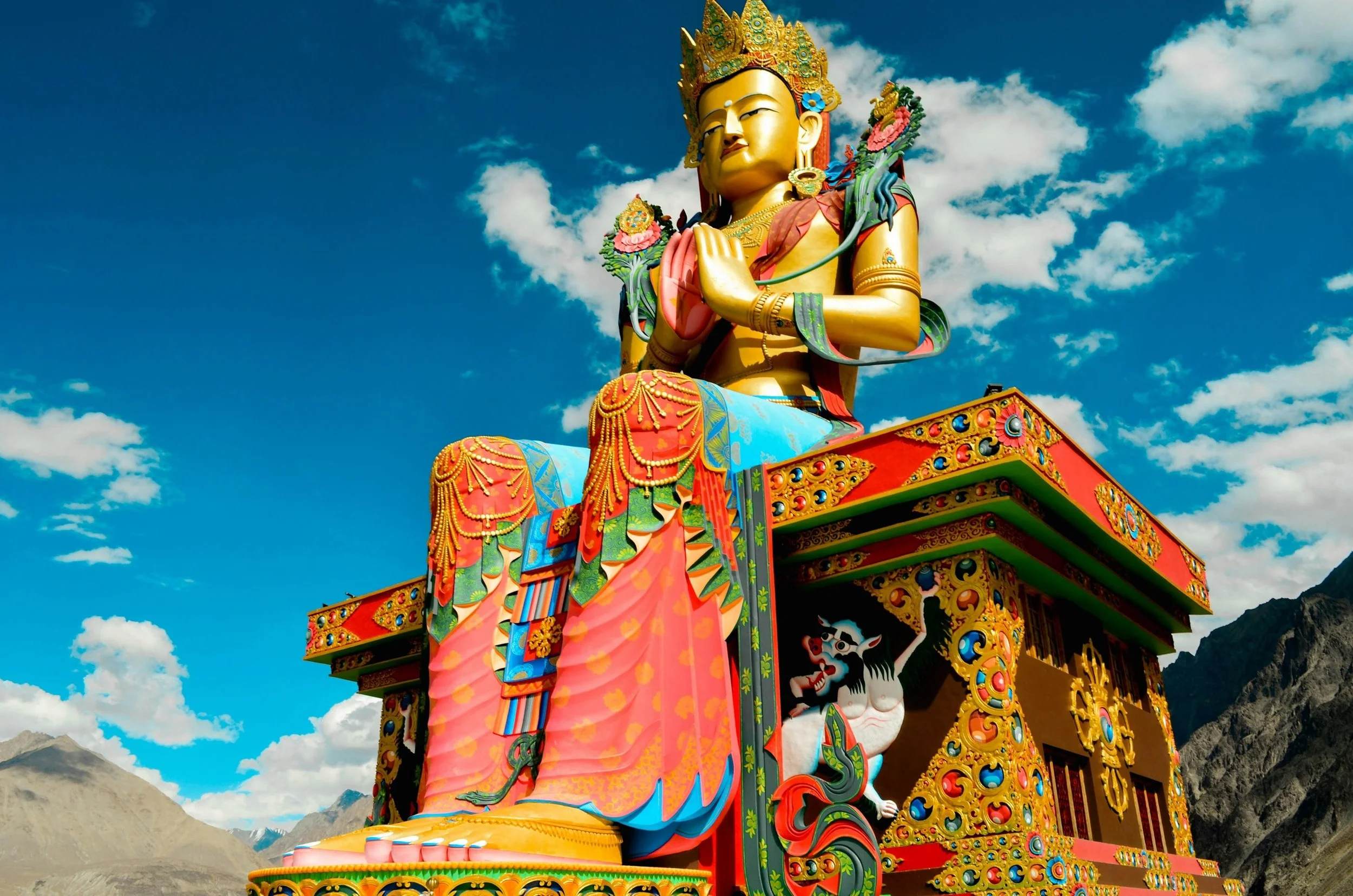
In the late afternoon, we head to Thiksey Monastery. A 12-story complex often compared to the Potala Palace in Lhasa, it is the largest monastery in central Ladakh. Its iconic Maitreya Buddha — 15 meters tall, made of clay and covered in gold paint, and filled inside with volumes of Buddhist canonical texts — remains the largest Buddha statue in Ladakh. We will also visit the protector's room to receive a blessing for our journey ahead.
Upon return, the group comes together for dinner and a sharing circle.
-
We begin with morning yoga and breathwork, anchoring the body and spirit before journeying deeper into Ladakh land.
We begin after breakfast and head west out of Leh, following the Indus River.
Our first stop is Sangam, the confluence of the Indus and Zanskar rivers.
A short drive further brings us to Magnetic Hill, a well-known optical illusion where the surrounding terrain makes a downhill road appear to slope upward.
At Khaltse, we leave the main highway and turn onto a narrower road that follows the Indus deeper into the valley. We will grab a quick lunch before the road becomes more remote. From there, the landscape will shift: quieter, greener, and increasingly off the tourist trail.
We arrive in Garkon, one of five villages of the Aryan Valley and home to the Brokpa people — an Indo-Aryan ethnic group who have maintained a distinct culture, language, and belief system for centuries, entirely separate from the Tibetan-Buddhist majority of Ladakh. Located at a lower altitude than Leh, the valley is noticeably warmer and more fertile, with apricot trees, walnut groves, and barley fields lining the riverbanks. We will visit the local museum, housed in a 13th-century building, containing ancient artifacts, traditional tools, and a picture gallery documenting Brokpa life and heritage.
We will rest and do a sharing circle in the evening.
-
After morning yoga practice and breakfast, we are leaving Garkon and heading toward Batalik.
From Batalik, the road climbs steeply toward Hamboting La Pass at 4,024 m (13,202 ft) — the single high-altitude crossing on this route. At the top, we will enjoy an eagle-eye view over the surrounding valleys. We take a moment here before beginning the descent toward Kargil.
In Kargil, we stop for fuel and lunch. The town sits at the confluence of several major routes and marks the transition from the Aryan Valley landscape into the entirely different world of Suru Valley.
Heading south from Kargil along the Suru River, the scenery shifts dramatically. The valley opens into unexpected greenery: cultivated terraces, apricot orchards, and river meadows line the road as we follow the Suru downstream.
We make a stop at Kartse Khar, a small Buddhist village near Sankoo, home to a striking 20-foot Maitreya Buddha carved directly into a rock face, believed to date back to the 7th century. It is one of the earliest Buddhist heritage sites in the Kargil region and an easy, rewarding stop.
Continuing south, we reach Panikhar — the finest viewpoint in the valley for the Nun-Kun massif, the highest peaks in the Zanskar Range. Nun stands at 7,135 m and Kun at 7,077 m, and on a clear afternoon their snow faces and glacier tongues dominate the entire skyline. Shortly after, we stop at the suspension bridge above the Parkachik Glacier — a vast wall of ice descending from the slopes of Nun-Kun, feeding the Suru River below.
We settle in for the evening in Suru Valley.
-
As usual, we begin with morning practice, and after breakfast, we leave Suru Valley behind and continue south. The landscape becomes wilder and quieter with every kilometer. Villages thin out, the river narrows, and the mountains close in around us.
Our first major stop is Rangdum, the last inhabited village of Suru Valley. Perched on a small hillock in the middle of a vast, open plain, Rangdum Monastery was founded in the 18th century and belongs to the Gelugpa school of Tibetan Buddhism. It marks a cultural turning point on the route — behind us, the predominantly Muslim communities of Suru Valley; ahead, the Buddhist world of Zanskar. We stop here for lunch and take a short walk to the monastery.
From Rangdum, the road climbs gradually toward Penzi La Pass at 4,401 m (14,436 ft) — the gateway to Zanskar and the highest point on the Kargil–Padum highway. Just before the summit, two small alpine lakes appear unexpectedly on the plateau. At the top, we cross from one world into another.
Just below the pass on the descent, the Drang Drung Glacier comes into view. One of the largest glaciers in Ladakh, it stretches up to 23 km in length and sits at an average elevation of 4,780 m. It is the source of the Stod River and, downstream, a key contributor to the Zanskar River itself. What makes it remarkable is that it requires no trekking — the full scale of the glacier is visible directly from the road.
Beyond the glacier, the descent into Zanskar begins. The greenery of Suru Valley is gone. In its place is a vast, wide, high-altitude cold desert. This is Zanskar.
We arrive in Purne as the light fades — a small village on the banks of the Tsarap River and our base for tonight.
We finish the day with evening circle and dinner.
-
Today we will rise early for the most memorable morning of the journey — the trek to Phuktal Monastery.
From Purne, a well-defined trail follows the left bank of the Tsarap River into the Lungnak Valley. The path is moderate, scenic, and rewarding — the river keeps you company throughout, and the surrounding cliffs grow more dramatic with every turn. Just before the monastery, a hanging bridge crosses the river, and then Phuktal reveals itself.
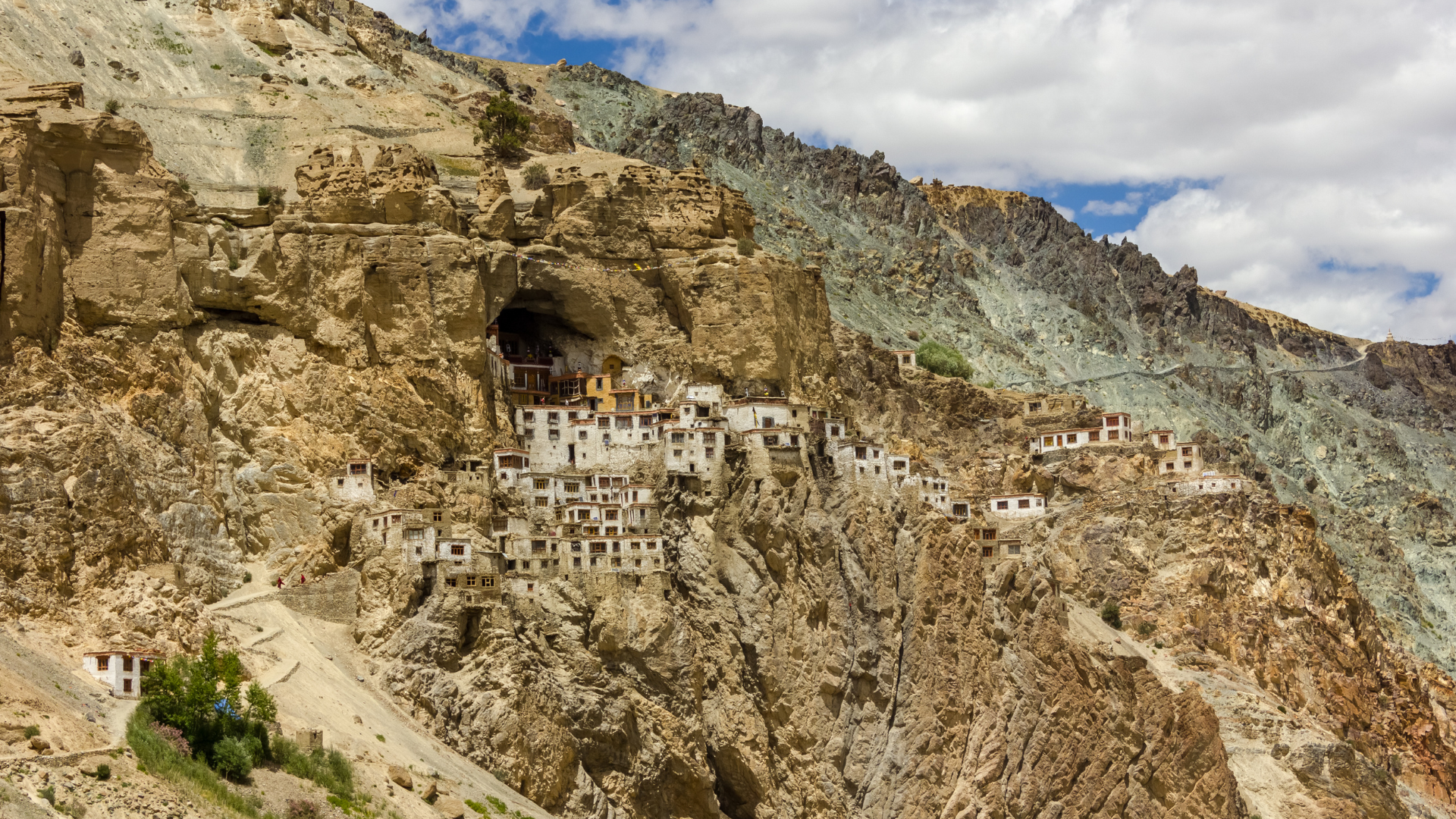
Built directly into and around a natural cave in the cliff face, Phuktal has been a centre of Buddhist learning, meditation, and retreat for centuries. The cave itself is believed to have been inhabited by the 16 Arhats, the legendary disciples of Buddha, and by great scholars including Padmasambhava and Lama Marpa Lotsawa. Today, it is home to around 70 monks, a temple, prayer rooms, a library, a sacred spring, and monastic quarters — all layered organically into the rock. The trek takes approximately 2–3 hours round trip, and the monastery deserves time to explore, sit in silence, and absorb where you are.
We trek back to Purne in the early afternoon and load up for the drive to Padum which is approximately 3–4 hours on the road, passing through a series of remote Zanskari villages along the Lungnak River valley. The isolation out here is complete: no phone signal, no roadside stops, no crowds.
We arrive in Padum, the administrative capital of Zanskar, named after Padmasambhava — Guru Rinpoche — whose influence runs through every monastery and village in the valley. After the silence of Phuktal and the long road in, Padum will feel almost like a city, though it is a small town.
We will settle in for the evening, sharing circle and short practice before bed.
-
We begin the day with morning yoga and breathwork, gently awakening body and breath before heading back to Leh.
We begin with visits to two of Zanskar's most significant monasteries.
The road is aligned along the course of the Zanskar River all the way from Padum to Nimmu, offering a continuous and river gorge journey through some of the most remote and visually striking terrain in Ladakh.
We arrive in Leh in the evening, closing a remarkable loop through some of the most remote and least-visited corners of the Himalayas.
We will end the day with a sharing circle and group dinner.
-
We begin the day with morning yoga and breathwork, reconnecting with the body.
We will be heading southeast into one of the least-visited corners of Ladakh — the Changthang plateau.
At Chumathang, roughly halfway into the journey, we make a stop at the natural hot springs in the middle of the high-altitude desert.
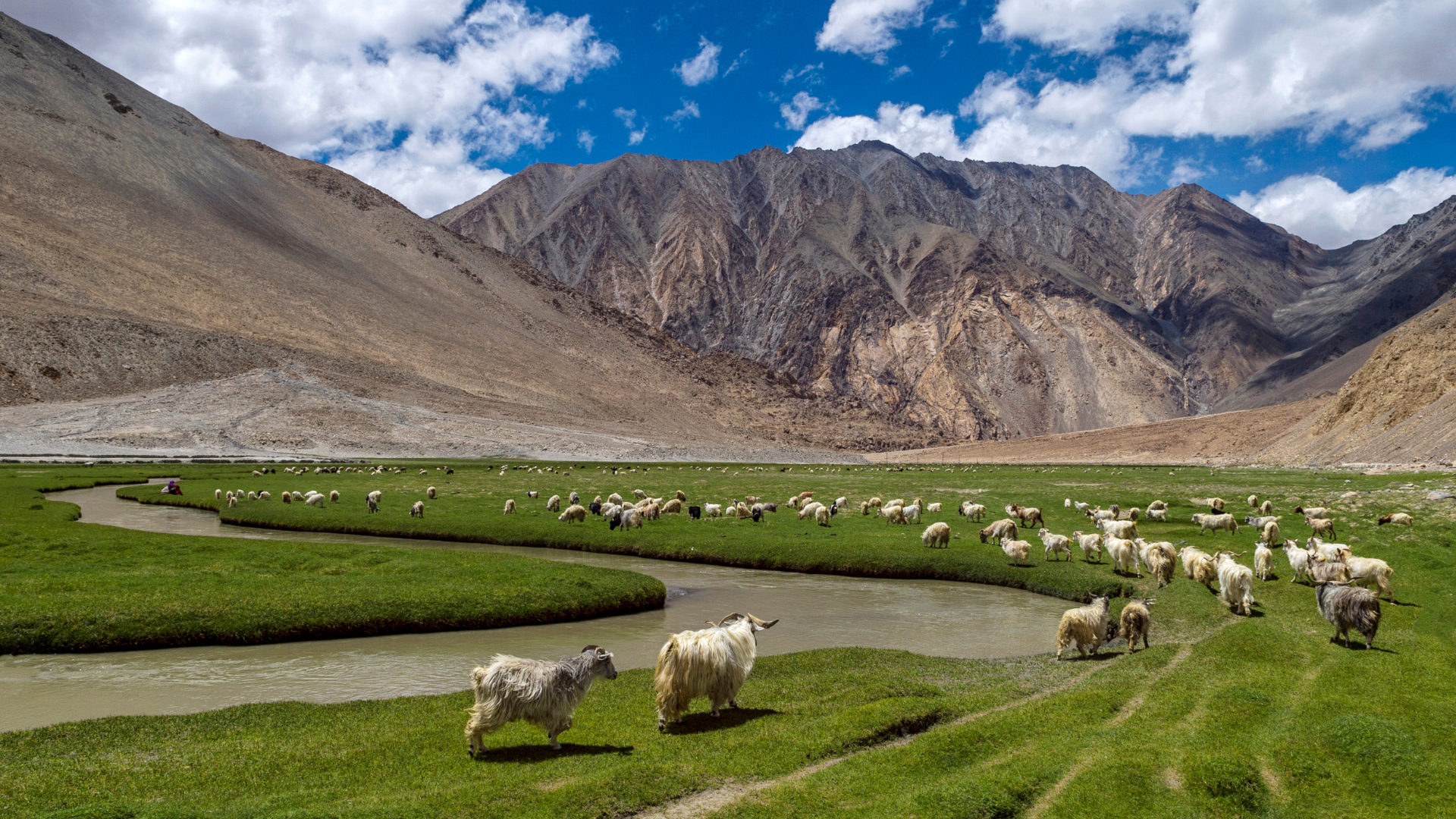
Beyond Chumathang, the landscape shifts completely. Enormous rolling plains, small clustered mountains, and a sky so wide it seems to press down on everything. Herds of Kiang roam across the river plains, generally seen across the water, as shy as ever.
Soon we arrive in Hanle — a small, quiet village of around a thousand people, sitting at 4,300 m. An old trade route once passed through here, connecting Ladakh with Tibet. Traders carrying salt and wool would have walked right by the monastery that still stands on the hill above the valley.
The two anchors of Hanle: the 17th-century Hanle Monastery perched on a hilltop above the plains, and higher up on the ridge, the white dome of the Indian Astronomical Observatory — one of the world's highest optical telescopes, and the reason Hanle was designated in 2022 as India's first Dark Sky Reserve.
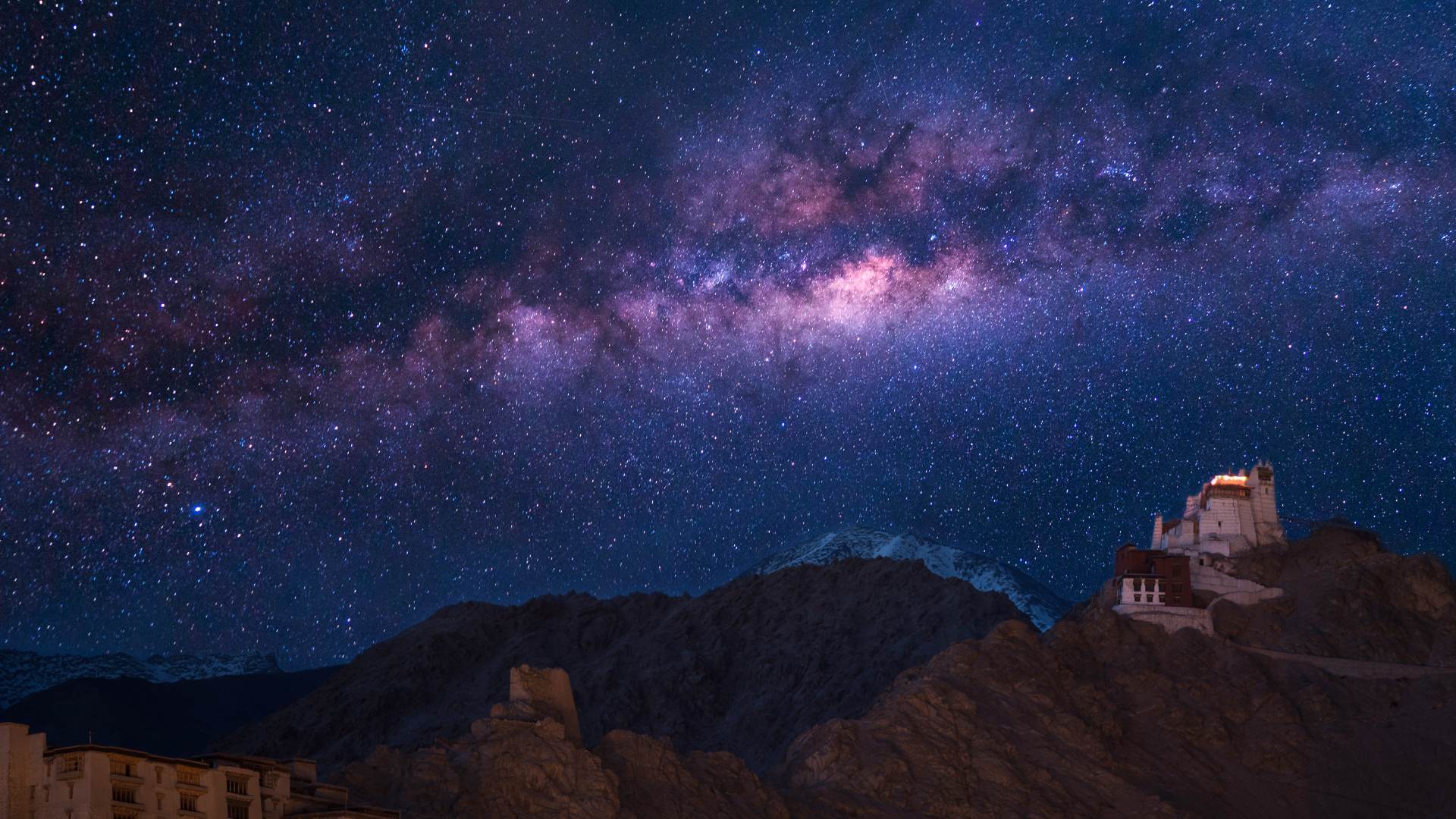
After settling in, we gather in the evening for a group stargazing session. The Milky Way here is not a faint smear on the horizon — it is a river of light stretching from one end of the sky to the other, visible to the naked eye and unlike anything most people have ever seen.
-
We begin with morning yoga and breathwork, preparing to ride toward the sacred waters
This will be one of the most cinematic stretches of the entire journey.
We will be heading west across the open Changthang plateau.
At Sumdo, we begin a gentle ascent. Just beyond Namshang La, the road crests and reveals Kyagar Tso — a small lake in the Salt Valley known locally as the Lake of Joy. Sitting at an elevation of 4,705 m, it is one of the highest saltwater lakes in Ladakh. We will stop and walk to the water's edge to watch the reflection of the surrounding mountains in perfectly still water.
From Kyagar Tso, another 20 km brings us to Tso Moriri.
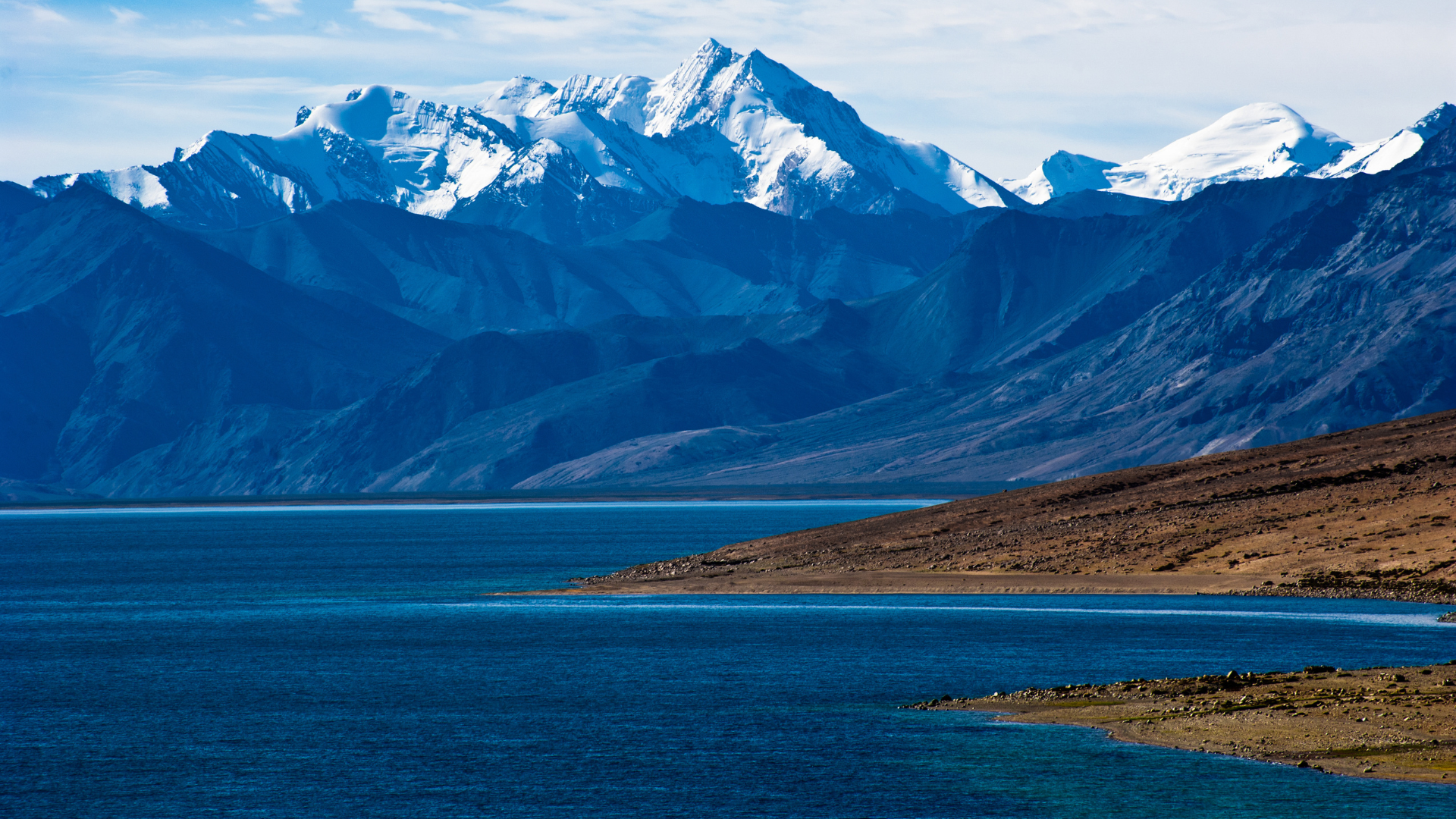
Tso Moriri sits at 4,522 m and is the largest high-altitude lake lying entirely within India, spanning 26 km north to south and 3–5 km wide. Kiang roam the shoreline. On clear days, peaks exceeding 6,000 m frame the lake on both the east and west.
On the western bank sits the village of Korzok and its 400-year-old monastery — home to more than 70 lamas and one of the highest permanently inhabited villages in India at 4,572 m.
We spend the afternoon walking the lakeshore, visiting Korzok Monastery, and watching the light shift across the water as the sun drops. The lake changes color through the day — blue, green, grey — and at sunset, the surrounding peaks turn gold above its surface.
The night sky here, like in Hanle, is extraordinary.
We will connect for the evening sharing circle and the practce by the fire.
-
We rise early for one final sunrise over the lake before loading up and beginning the drive back to Leh.
We take the longer, more scenic return route — entirely different from the road that brought us here — crossing high passes and one more lake.
From Korzok we head north through Sumdo and begin climbing toward Polo Kongka La, a rough and remote pass that few travelers cross. The road is demanding but the solitude is absolute.
Descending from the pass, we reach Puga Valley — a striking geothermal landscape where sulphurous hot springs bubble up from the ground amid a vivid expanse of mossy green grass. The hot springs are rich in sulphur and borax and are said to be beneficial for skin and rheumatism.
A short drive from Puga brings us to Tso Kar — a high-altitude salt lake that most Ladakh visitors never see. Its western part is saline while its eastern section contains freshwater, a unique twin-character that makes it ecologically remarkable.
From Tso Kar, we begin the ascent to Tanglang La at 5,328 m (17,480 ft) — one of the highest motorable passes in the world and a fitting high point for the final day.
The views from the top stretch across an enormous sweep of the Changthang and the ranges beyond. We pause here as a group before beginning the long, gradual descent back into the familiar valley of the Indus.
We arrive in the late afternoon, completing a journey that has covered some of the most remote, sacred, and extraordinary landscapes on the planet — from the Aryan Valley to Zanskar, from Phuktal's cave to the dark skies of Hanle, and across the roof of the world to the shores of Tso Moriri. Time to rest, reflect, and let it all settle.
We will end the day with a closing ceremony.
-
After a nourishing breakfast and a final moment to take in the serene mountain air, we make our way to the Leh airport for our flight back to Delhi.
This is a day of quiet integration - a soft landing back into the world, carrying with us the stillness of the Himalayas, the clarity of the practices, and the deep connections we’ve made.
Our journey together may be coming to an end, but its resonance will continue to unfold long after we part ways.
“Shambhala is far beyond the ocean. It is the mighty heavenly domain.
The great Shambhala is far beyond the snowy Himalayas... Only pure hearts can reach it. Only those who are ready can understand its meaning. ”
— N. Roerich
🏔️ What is Shambhala?
Shambhala is often described as a hidden kingdom of peace and wisdom, said to lie somewhere in the Himalayas - possibly in Ladakh, Tibet, or Central Asia. But more than a physical place, it represents a state of inner clarity and awakening.
-
In Tibetan Buddhism, the Kalachakra Tantra describes Shambhala as a sacred realm ruled by enlightened beings.
In Hindu tradition, it’s linked to the future appearance of Kalki, the avatar of Vishnu, in a hidden land of truth.
Mongolian and Bön myths speak of luminous beings in a pure land beyond the mountains.
Nicholas Roerich, an explorer and mystic, traveled through Ladakh and Tibet in search of Shambhala, calling it a center of spiritual guidance for Earth.
Even the Dalai Lama has spoken of Shambhala - not as a fantasy, but as a reality that can be experienced through inner discipline and compassion.
-
We travel to Ladakh not just to explore beautiful landscapes and ancient monasteries, but to make an inner journey - to reconnect with silence, with presence, with something sacred and timeless.
Through breathwork, Taoist movement, meditations, and pilgrimages to powerful places, we prepare ourselves to remember what Shambhala truly is.
Maybe we won’t “find” it on a map.
But we may feel it within. And when we do, the path to it begins to reveal itself.
The wise ones say: Shambhala is not only a place, but a state of being, a luminous condition of the soul.
Far beyond the clouds, guarded by the snowy peaks and winds that whisper in tongues unknown to man, lies the Radiant Kingdom - Shambhala.
Not a fantasy, nor a relic of forgotten myth, but a realm of sublime reality. It is invisible to the unawakened eye, yet present to those who carry purity of heart and the flame of aspiration.
This pilgrimage is not undertaken for curiosity.
With each step through the Himalayas, we shed fear, limitation, and illusion and step closer to the essence of freedom itself.
Program
Our daily practices are intentionally designed to support physical resilience, nervous system regulation, and energetic integration, especially considering the demands of high-altitude travel and the energetic intensity of Ladakh’s sacred sites.
-
We will work with therapeutic, functional movement to stabilize the joints, release travel-related tension, and maintain circulation.
Practices will focus on grounding, realignment, and nervous system support, with special attention to the spine, hips, and breath.
This is not performance-based yoga; it is recovery and integration.
-
We will use breath-based techniques (pranayama and somatic breathing) to assist with oxygen intake, balance energy, and manage altitude-related symptoms.
Breathing practice will be progressive and safe, helping participants build tolerance and restore internal rhythm.
-
Zen-style meditation, guided and silent, to cultivate samadhi and the direct experience of presence beyond methods.
In this environment, mental clarity tends to arise naturally.
The intention is not withdrawal, but inward connection - supporting self-awareness, emotional regulation, and inner stillness.
-
In select locations, one of our guides will facilitate intuitive sessions to help the group connect with the energetic qualities of the land.
This may influence which practices are offered and how the group moves through the day. These sessions are held with professionalism and respect for individual boundaries.
-
Explore the universal stages of consciousness, Enneagram wisdom, and a map of human development — empowering you to meet yourself and your clients with greater clarity, compassion, and transformational insight.
-
Chanting, mantra, and kirtan sessions to activate the deep heart and build sangha (sacred community)
Meet the Team
-

ANASTASIA
Breathwork, Yoga & Meditation
-
MO
Route Design, Motorcycle Operations & Local Coordination


EARLY BIRDS OFFER
Enjoy 10% off till JUNE 30*
*FULL PAYMENT REQUIRED
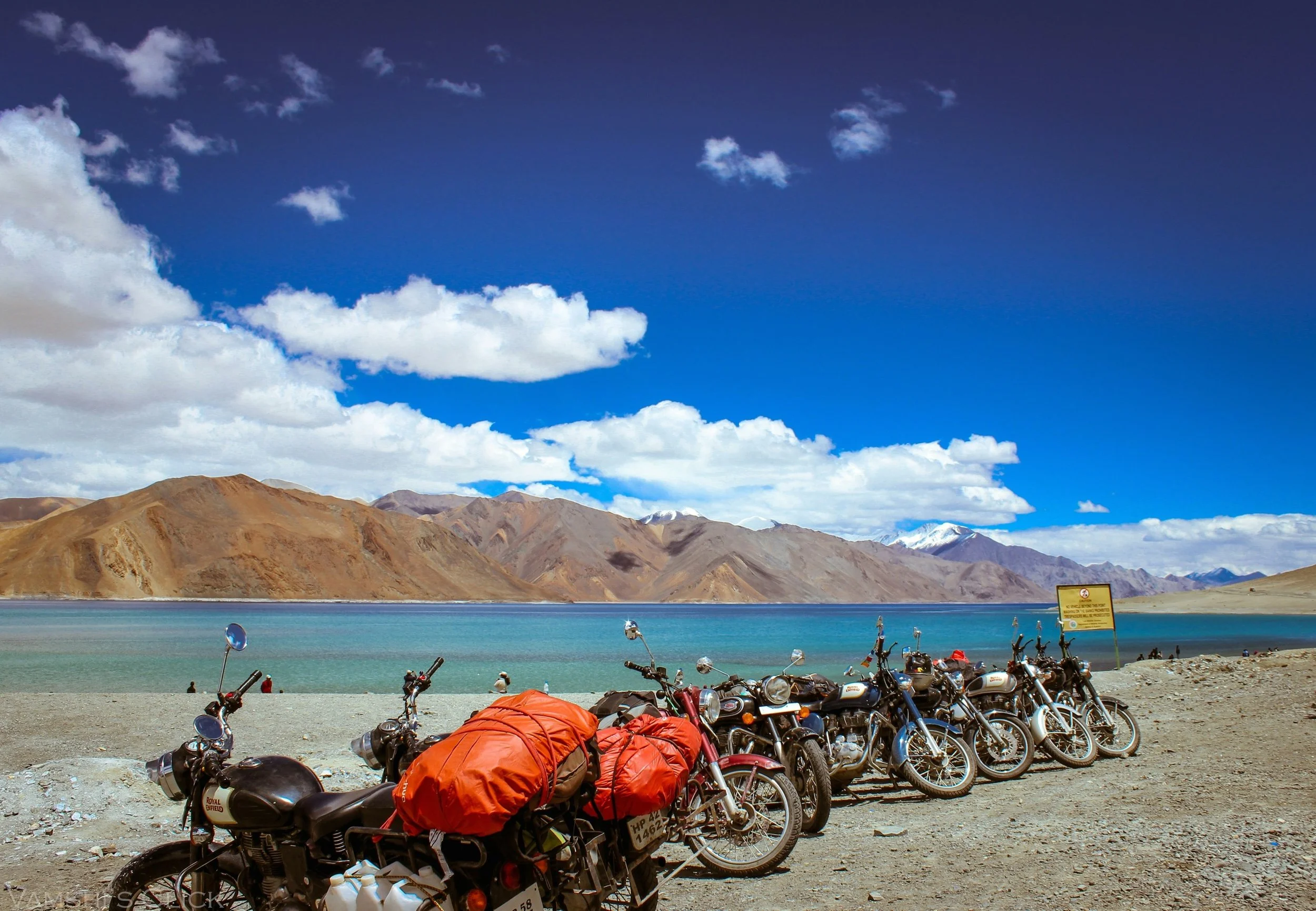

For those who want to experience the full journey without riding a motorcycle. You'll travel as a passenger with a skilled rider, allowing you to fully relax and take in the breathtaking landscapes.
-
11 nights in comfortable guesthouses and boutique stays across Ladakh.
-
Nutritious breakfasts in all locations.
-
Delhi → Leh → Delhi
-
You’ll travel as a passenger with a professional rider on a Himalayan Royal Enfield (or similar).
-
Daily yoga, breathwork, meditation, channeling circles, and integration sessions.
BONUS! A personal, private session to explore your energy, life path, or inner clarity.
-
Including airport pickup and drop-off in Leh and Delhi.
-
Backup vehicle, guide, mechanic, and assistant accompanying the group.
Help with packing, logistics, and well-being throughout the journey.
-
All required permits for Nubra, Pangong, and Turtuk regions.
Entry to monasteries, sacred sites, and curated local experiences.

For experienced or confident riders who wish to explore Ladakh’s majestic landscapes on their own motorcycle.
-
11 nights in comfortable guesthouses and boutique stays across Ladakh.
-
Nutritious breakfasts in all locations.
-
Delhi → Leh → Delhi
-
You’ll travel on a Himalayan Royal Enfield (or similar).
Fuel Costs Covered
-
Daily yoga, breathwork, meditation, channeling circles, and integration sessions.
BONUS! A personal, private session to explore your energy, life path, or inner clarity.
-
Including airport pickup and drop-off in Leh and Delhi.
-
Backup vehicle, guide, mechanic, and assistant accompanying the group.
Help with packing, logistics, and well-being throughout the journey.
-
All required permits for Nubra, Pangong, and Turtuk regions.
Entry to monasteries, sacred sites, and curated local experiences.

For those who prefer comfort and stability, this package offers travel in a private Toyota Innova with a professional driver. Ideal if you don't wish to ride a motorcycle or be a passenger.
-
11 nights in comfortable guesthouses and boutique stays across Ladakh.
-
Nutritious breakfasts in all locations.
-
Delhi → Leh → Delhi
-
You’ll travel as a passenger with a professional rider on a Himalayan Royal Enfield (or similar).
-
Daily yoga, breathwork, meditation, channeling circles, and integration sessions.
BONUS! A personal, private session to explore your energy, life path, or inner clarity.
-
Including airport pickup and drop-off in Leh and Delhi.
-
Backup vehicle, guide, mechanic, and assistant accompanying the group.
Help with packing, logistics, and well-being throughout the journey.
-
All required permits for Nubra, Pangong, and Turtuk regions.
Entry to monasteries, sacred sites, and curated local experiences.
Special Offer
To make your journey more accessible, we offer the option to join the retreat with a 4-part payment plan — so you can spread your investment over time, without stress.
How it works:
• The total retreat fee is split into 4 equal monthly payments
• The first payment acts as your deposit and secures your spot
• The remaining 3 payments are made monthly, starting 30 days after your deposit
• Payments can be made via credit card, bank transfer, or Stripe/PayPal (choose one)
PLACES YOU WILL VISIT
-
![]()
LEH, LADAKH
-
![]()
SHANTI STUPA, LEH
-
![]()
THIKSEY MONASTERY
-
![]()
STUPAS, BAGSO MONASTERY
-
![]()
CHOMREY GOMPA
-
![]()
BAGSO MONASTERY
-
![]()
TSO MORIRI
-
![]()
PHUKTAL GOMPA
-
![]()
ARYAN VALLEY
-
![]()
ASTRONOMICAL OBSERVATORY